

Python is one of the most versatile and powerful programming languages available today. It’s widely used in various domains, from web development and data analysis to artificial intelligence and scientific computing. Whether you’re a beginner just starting out in python programming or an experienced developer looking to expand your skill set, mastering Python is a valuable endeavor.
In this comprehensive guide, we’ll explore the fundamentals of Python programming, advanced techniques, and practical applications. We’ll also provide valuable resources and direct you to our in-depth Python course at Kodacy to help you on your learning journey.
What is Python Programming?
Python, created by Guido van Rossum and released in 1991, is an open-source, high-level programming language. It is designed to emphasize readability and reduce complexity, making it an excellent choice for developers at any level. Python supports multiple programming paradigms, such as:
- Procedural Programming
- Object-Oriented Programming (OOP)
- Functional Programming
Python’s flexibility is further enhanced by its extensive standard library and vibrant community, which consistently contribute to its ecosystem.
Key Features:
- Readable Syntax: Code that resembles plain English.
- Cross-Platform Compatibility: Runs seamlessly on Windows, macOS, Linux, and more.
- Dynamic Typing: No need to declare variable types explicitly.
- Interpreted Language: Executes code line-by-line, simplifying debugging.
Why Choose Python Programming?
Python programming has redefined how businesses and developers approach problem-solving. Let’s explore its impact across various industries.
Impact on Industries
- Finance: Python programming powers quantitative analysis, algorithmic trading, and risk management through libraries like NumPy and Pandas.
- Healthcare: In the medical field, Python programming facilitates data analysis for research, image recognition for diagnostics, and machine learning for personalized treatment.
- Entertainment: Companies like Netflix and Spotify rely on Python programming to analyze user data and deliver personalized content.
Global Demand for Python Programmers
With the tech industry booming, Python programming expertise is in high demand. Reports show that Python consistently ranks among the highest-paying programming skills. Employers seek Python programmers for roles such as:
- Data scientists
- Machine learning engineers
- Web developers
The need for Python programming talent spans startups, large enterprises, and even non-tech sectors.
Python has consistently ranked as one of the top programming languages. Here’s why it stands out:
a) Beginner-Friendly
Python’s simple and intuitive syntax allows newcomers to focus on problem-solving rather than the intricacies of syntax.
b) Versatility
Python is a jack-of-all-trades. It’s used for:
- Web development (using frameworks like Django and Flask)
- Data science and machine learning (using libraries like NumPy, Pandas, and TensorFlow)
- Game development
- Automation and scripting
- Scientific computing
c) High Demand in the Job Market
Python skills are highly valued, with developers enjoying lucrative job opportunities in diverse industries.
d) Extensive Community and Resources
With a massive global community, Python programmers have access to abundant resources, support, and libraries.
Why Learn Python?
- Ease of Learning: Python’s simple syntax and readability make it an ideal first language for beginners.
- Versatility: Python is used in web development, data science, machine learning, automation, and more.
- Community and Support: A large, active community means plenty of resources, tutorials, and third-party libraries.
- High Demand: Python developers are in high demand in various industries, offering excellent career opportunities.
For those new to Python or programming in general, our Python course at Kodacy is designed to take you from beginner to proficient.
Applications of Python Programming
Python programming has proven its value in various domains:
- Web Development: Python programming powers frameworks like Django and Flask, which enable efficient development of scalable websites.
- Data Science: Python programming is a cornerstone of data analysis, using tools like Pandas and Matplotlib.
- Machine Learning: Libraries such as TensorFlow and PyTorch make Python programming ideal for building machine learning models.
- Automation: Python programming can automate repetitive tasks, saving time and effort.

The Future of Python Programming
Python programming continues to shape the future of technology.
AI and Quantum Computing
Python programming is at the forefront of quantum computing, with libraries like Qiskit enabling quantum algorithms.
Integration with IoT
Python programming tools such as MicroPython and CircuitPython power IoT devices, enabling connectivity and automation.
Resources for Further Learning
Continuing your Python education is crucial for staying up-to-date with the latest developments and best practices. Here are some resources to help you deepen your knowledge:
Online Courses
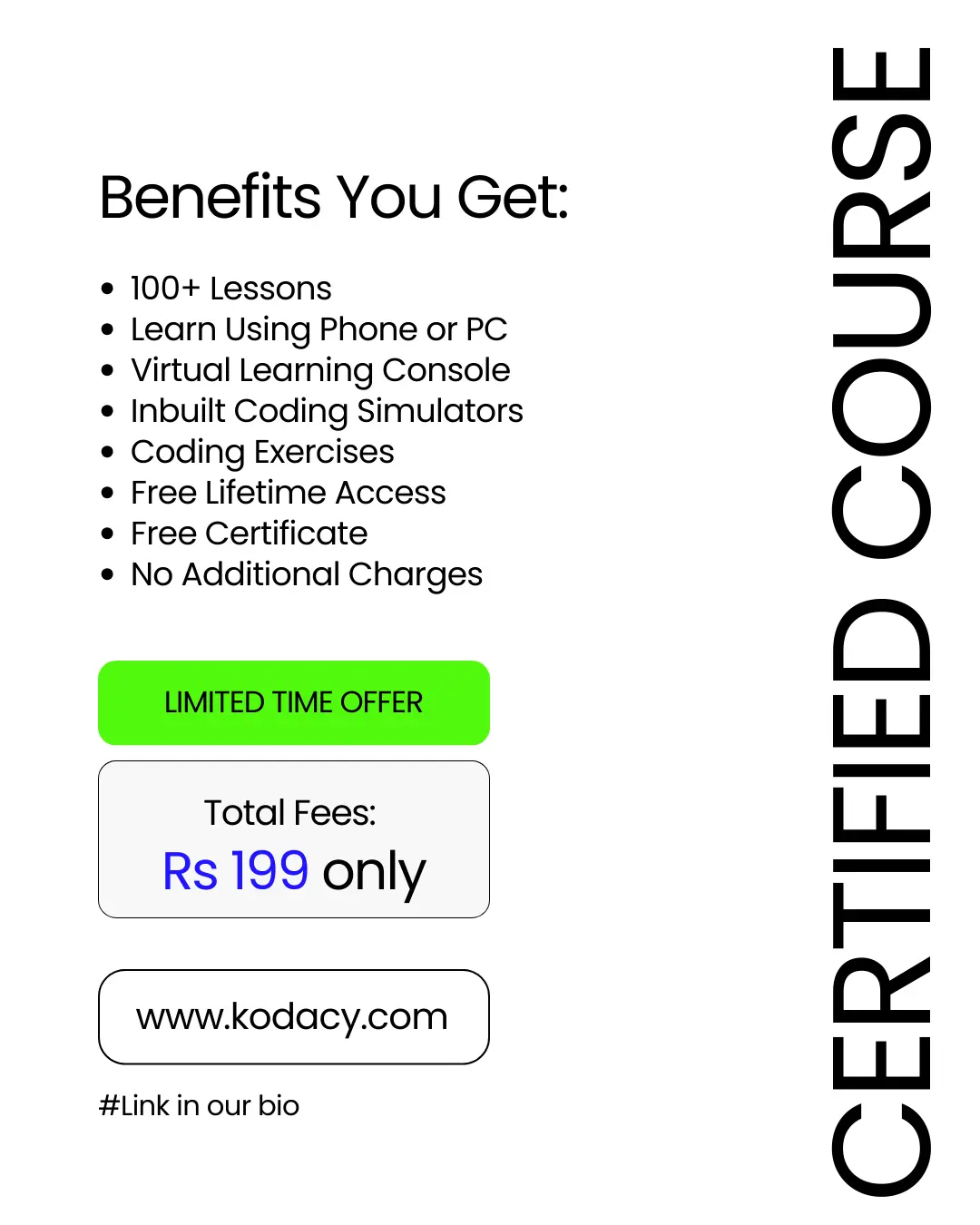
- Kodacy Python Course: Our comprehensive Python course at Kodacy is designed to take you from beginner to advanced level, covering all the essential topics and practical applications.
- Coursera: Offers courses from top universities.
- edX: Provides a variety of courses from reputable institutions.
Python Programming Books
- “Automate the Boring Stuff with Python” by Al Sweigart: A great book for beginners that focuses on practical applications.
- “Python Crash Course” by Eric Matthes: A hands-on, project-based introduction to Python.
- “Fluent Python” by Luciano Ramalho: An in-depth guide for experienced programmers.
Documentation and Tutorials
- Official Python Documentation: The official Python documentation is an essential resource for understanding the language and its standard library.
- Real Python: A website with tutorials, articles, and courses on Python programming.
- Stack Overflow: A community-driven Q&A site where you can ask questions and find solutions to common problems.
Python is a powerful and versatile programming language that opens up a world of possibilities. Whether you’re interested in web development, data analysis, machine learning, or automation, Python has the tools and libraries to help you succeed.
By following this guide and utilizing the resources provided, you’ll be well on your way to mastering Python. For a more structured learning experience, don’t forget to check out our Python course at Kodacy, where we provide comprehensive lessons, hands-on projects, and expert guidance.
